

Violence is often described as the intentional use of physical force, or power, threatened or actual against ones self, another person or even against a group or community that results in or has a high likelihood of resulting in injury, death, psychological harm, and deprivation.
Unintentional Injuries are those who committed an act of violence without intent to harm. One of the most common cases of unintentional injuries are motor vehicle crashes. Homicide which is most commonly known as “murder” or “non-negligent manslaughter” has been shown to be the thirteenth leading causes of death in the United States, although when it comes to people between the ages of 15 to 24 it is the second leading cause of death. Depending on ones socioeconomic status, location, gender, and ethnicity unfortunately have a major impact on how crime will personally effect you.
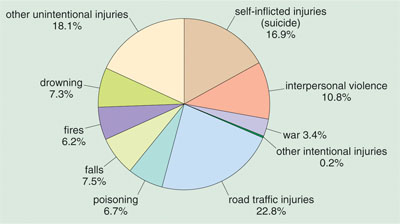
Violence in schools has risen, and that can be seen just by turning on the TV and watching the news nowadays. About 56% of crimes against college students happened on campus. There are many different reasons for why crimes occur on campus, political demonstrations, interpersonal violence, and mental health issues are currently on the rise at college campuses. Relationship violence can either be noticeable and prevented as well as a hidden problem on college campuses. Factors that increase the likelihood of violent acts are societal factors, religious beliefs and differences, community contexts, political differences, breakdowns in the criminal justice system and stress, depression and any other kind of mental health issues.
Domestic Violence can be a major issue when it comes to violence in a family, this type of violence refers to the use of force to control and maintain power over another person in the home environment. These types of violent situations may happen between a parent and a child, between spouses, siblings, intimate partners, or any family members. It can involve emotional abuse, verbal abuses, threats of physical harm and physical violence which can be anywhere from slapping and shoving to beatings, rape and homicide. There is a cycle of violence and this cycle consists of three major phases.
- Tension building- this phase comes before the overtly abusive act and includes breakdowns in communication, anger, psychological aggression and violent language, growing tension and fear.
- Incident of acute battering- this stage, the batterer usually is trying to “teach her a lesson” but when he begins to feel like has inflicted pain to the point where he is in charge then he will stop. When this attack is over, he most likely will respond with shock and denial about his own behavior or he may even begin to blame the woman for “making” him do it.
- Remorse/ Reconciliation- this is referred to as the “honeymoon” period, the batterer will act as if they are kind, loving, and apologetic, swearing that he or she will never act violently again and will work to change their behavior. Although when something comes back up that triggered an attack before, the cycle of violence will start over.
Sexual Violence is an act in which one person is sexually intimate with another person without having the other persons consent. This assault can range from touching to forceful penetration and examples of this are ignoring indications that intimacy is not wanted, threatening force or other negative consequences and actually using force. Unfortunately there are some contributors that can lead to sexual violence which can come from societal assumptions and traditions.
- Trivialization- it is often shown that people think that rape committed by a husband or intimate partner does not count as rape.
- Blaming the victim- in spite of efforts to combat this type of thinking. there is still the belief that a scantily clad woman “asks” for sexual advances.
- Pressure to be macho- Males are taught from a young age that showing emotions is a sign of weakness. This portrayal often depicts men as aggressive and predatory and females as passive targets.
- Male socialization- many people still believe that “boys will be boys” and being sexually predatory is natural for men. Women are often objectified which is described as “sexual objects” in the media which contributes to this conception of male behavior.
- Male misperceptions- media often implies that sex is the focus of life, so it comes to no surprise that some men believe that when a women says no, she is really signaling that she wants to be seduced which is not the case.
- Situation factors- dates in which the male makes all the decisions, pays for everything, and generally controls the whole situation they are more likely to end in an aggressive sexual scenario. Alcohol and other drugs will increase the risk and level of danger for this type of situation to occur.
My journey…
I have been doing really well this week, I think that I have cut back enormously and have noticed that there will be times when I am driving (which I said before is my biggest problem) and I won’t have one cigarette. Also another reason I think that I have been able to put cigarettes on the back burner is because of money. I have noticed how much money I really spend on cigarettes and how much I am costing myself, there will be days where I am so confused on why I am running out of money but then I look down and see that empty pack and realize I need another one and then remind myself that, that is where my money is going. I still smoke, but I am getting closer and closer to my goal of quitting.