
There are many different ways that someone can catch an infectious condition and normal day activities can even be the cause for some. As our world has adapted to change we have been lucky enough to be able to survive these infectious conditions because wayback it was more than likely that you would die when catching an infection. An endemic is an infectious disease that is present at expected prevalence rates in pretty much all different parts of the world. An epidemic is when the disease begins to rise and the endemic numbers become higher than expected. A global epidemic or commonly known as pandemic can be very dangerous for example in the early 1900’s influenza killed more than 20 million people in many countries.
Infection, Risk Factors, and the Role of Mindfulness
It’s easy to be careless when going on with your everyday life because let’s face it, most of us think we are untouchable but there are certain steps you can take to avoid catching infectious diseases.
Preventing Pathogens from Entering the Body– pathogens can enter the body in many different ways, direct contact from an infected person, indirect contact which can be touching an object that an infected person has touched, autoinoculate yourself which means touching an uninfected part of your body after touching an infected part. Being aware of your surroundings, always washing your hands, and being aware of who you are in contact with can decrease your chances of infecting yourself.
Risk Factors You Can Control- limiting your stress, good nutrition, staying active, good amount of sleep, keeping up with your hygiene, making changes in your community by cleaning up toxins, setting policies on contaminant levels and reducing the likelihood of exposure to pathogens or toxins.
Even though there are ways to control risk factors there are also some risk factors you can’t control.
- Heredity
- Aging
- Environmental conditions
- Organism virulence and resistance.
How does our immune system work?
If an antigen that is foreign enters the body (does not belong there) our body will immediately begin to defend itself. Antibodies begin to form during this process and depending on the antigen entering the body the antibodies will match to the specific antigen. The Humoral immune response system is the bodies main defense against many bacteria and different poisonous substances which are known as toxins.
What happens when the Immune System Misfires: Autoimmune Diseases?
Although our immune response is usually on point and works in our favor just like anything else it can make mistakes and ends up targeting a tissue of it’s own because it suspects that it’s an enemy. Autoimmune disease is when the antibodies all team up and work against that tissue and attempt to destroy it. Research shows that there about 80 different types of autoimmune disease which have been reported to be either chronic, debilitating and life threatening.
Key Bacterial Infections: Staph, Strep, Meningitis, Pneumonia, TB, and Tick-borne Diseases
Staphylococcal Infections- commonly found on the skin or in the nostrils of most people pretty much whenever and will create no issues. Unless there is a cut or a break in the epidermis, or outer layer of the skin, then the staphylococci can then enter the system leading to an infection.
Streptococcal Infections- There are about five types of this infection which are broken into different groups, Group A are the most common diseases such as strep throat and scarlet fever, Group B known for causing illness in newborns, pregnant women, older adults, and adults with illnesses such as diabetes or liver disease.
Meningitis- an infection and inflammation of the meninges, the protective membranes that surround the brain and the spinal cord. Some forms can be contagious and can even spread through contact.
Pneumonia- a general term for a range of conditions that result in inflammation of the lungs and difficulty breathing. Can be characterized by chronic cough, chest pain, chills, high fever, fluid accumulation and eventual respiratory failure.
Tuberculosis- known for being a very deadly infectious disease, the common symptoms are persistent coughing, weight loss, fever and spitting up blood. People who are at high risk for catching this disease are among the poor, children, and the chronically ill, people in prisons and homeless shelters who continuously inhale infected air.
Tick-borne Bacterial Diseases- Lyme disease is a major threat to pets and humans in many different regions of the U.S and the symptoms range from none (which can be freighting) to a rash or bull’s eye lesion and flu like symptoms, chronic arthritis, blindness, and long-term disability.
Viral Infections: Mono, Hepatitis, Herpes, Mumps, Measles, and Rubella. These types of infections branch from viruses but the thing is viruses are incapable of carrying out any life processes on their own so they must invade a host in order to reproduce themselves. When the virus is successful invading the host, it will then inject its DNA and RNA into it leading to it taking over, forcing the cell to make copies of itself which contains this virus.
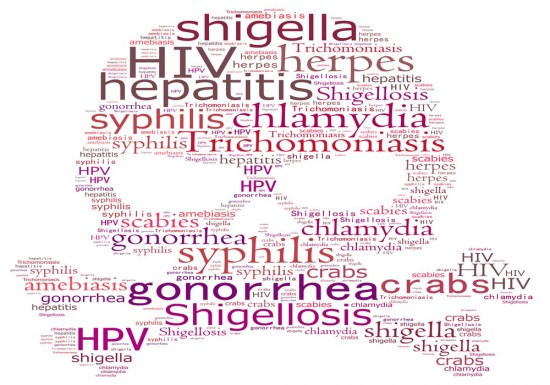
Sexually Transmitted Infections (we all talk about them and we all know what they are)
Knowing the routes of transmission is VERY important to be educated on. STIs are generally spread through some form of intimate sexual contact.
- Vaginal Intercourse
- Oral-genital contact
- Hand-genital contact
- Anal intercourse
Sexually Transmitted Infections
- Chlamydia-infection caused by bacterium Chlamydia trachomatis and typically does not show any symptoms and also is the most common reported STI in the United States.
- Gonorrhea- caused by bacterial pathogen Neisseria gonorrhoeae, typically infects the linings of the urethra, genital tract, pharynx, and the rectum. This disease can even spread to other parts of the body by the hands or through body fluids but typically during vaginal, oral, or anal sex. This disease is also on the rise in the United States.
- Syphilis- caused by a bacterium, the spirochete Treponema pallidum. Nearly wiped out a decade ago but has been an epidemic rise in the U.S in the recent years. There are four different types of this disease, Primary syphilis- the first stage and is particularly for men, Secondary syphilis- the infection is left untreated, secondary symptoms may appear a month to a year after the chancre disappears, Latent syphilis- after the secondary stage if the infection is left untreated then it begins to invade the body organs which causes lesions called gummas, Tertiary/late syphilis- this is years after the syphilis has entered the body and the effects become all to evident if it’s still untreated.
My Health Journey
This week has been a lot easier for me because like I said last week I have been so busy with work and what not that I don’t even have time to smoke a cigarette. I’m not gonna lie I still have a cigarette here and there but definitely not as much when I started writing this blog post. One specific thing that I noticed that helped me this week was being around my friend Sabrina a lot, she lives on the cape with me and is sadly leaving to move back home on Friday and so I have been trying to spend every minute I can with her. Why I say that it helped being with her is because she takes her health very seriously and since we have become so close she is concerned for mine because of me smoking and whenever I’m with her we talk about why I want to quit and what steps I’m taking and it really does help me. Knowing that someone really does care enough to talk to me about it and what struggles I’m having with quitting, especially someone who’s never even smoked a cigarette in her life. I am getting closer and closer guys! 🙂